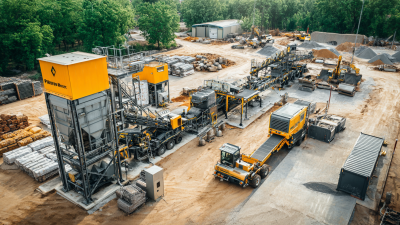
In the ever-evolving world of construction, staying efficient is absolutely crucial, and choosing the right machinery can make a huge difference. One of the game-changers in the industry right now are Paver Making Machines. These machines are really about making the process easier—helping produce high-quality Pavers faster, cutting down on labor costs, and meeting the increasing demand for durable, eco-friendly landscaping options. Looking ahead to 2025, it’s more important than ever for contractors and businesses to get familiar with the different types and features of these machines. Knowing what’s out there can really help you step up your game and run smoother operations.

Picking the right Paver Making Machine not only boosts your productivity but also keeps your product quality consistent. In this article, we’ll dig into the top 10 machines currently on the market — sharing their specs, what makes them stand out, and how they can benefit you. We’ll cover options from big names like Hunan Dazhang Group and Qunfeng Intelligent Machinery, as well as some fresh, innovative players. The goal is to give you clear insights so you can make smarter decisions and take your construction projects to the next level. Jumping on these advanced machines could really set you up for a more successful and efficient future in construction.
The Importance of Efficient Paver Making Machines in Modern Construction
In modern construction, the role of efficient paver making machines cannot be overstated. As the concrete paving equipment market continues to grow, projected to exceed USD 1.67 billion by 2024 and showcase a 4.2% CAGR through 2034, the importance of investing in advanced machinery becomes increasingly clear. These machines not only enhance productivity but also align with the evolving demands of construction projects, where quality and speed are crucial.
Recent innovations in paver technology emphasize ergonomics and automation, addressing the need for safety and ease of use. Companies are now focusing on eco-friendly solutions that cater to the ongoing urbanization trends, which further emphasizes the necessity of efficient paver making machines. Events showcasing the latest advancements allow professionals to firsthand experience the benefits of modern paving technology, ensuring contractors can make informed decisions that elevate their operational efficiency and project outcomes.
Key Features to Look for in Paver Making Machines
When selecting a paver making machine, it is crucial to consider several key features that can significantly enhance your construction efficiency. First and foremost, look for machines that offer high production capacity, as this directly impacts the speed of your projects. Additionally, reliability and durabilityare paramount—Paver Machines should withstand rigorous use without frequent breakdowns, minimizing downtime.
Another vital aspect is the versatility of the equipment. A machine that can produce various types of pavers and blocks will enable you to cater to diverse customer needs and project specifications. Incorporating advanced technology, such as automation and precision controls, can further improve the quality and consistency of the finished products. As leaders in the engineering and manufacturing sector, our commitment to integrating international technology positions us to offer state-of-the-art solutions for paver production, ensuring that your construction endeavors are both efficient and cost-effective.
A Comparative Analysis of the Top 5 Paver Machines in 2025
In 2025, the construction industry has seen significant advancements in paver making machines, with a notable emphasis on efficiency and sustainability. A recent industry report by MarketsandMarkets indicates that the global market for paver machines is expected to grow from $1.2 billion in 2022 to $1.8 billion by 2027, reflecting an annual growth rate of 8.5%. This surge is largely driven by the increasing demand for durable and high-quality pavement solutions across urban infrastructure projects.
When choosing a paver machine, it is crucial to consider factors such as production speed, energy consumption, and versatility. The best machines in the market now offer features like automatic mixing and precise weight controls, which enhance output quality and reduce material waste. Furthermore, many manufacturers are adopting eco-friendly technologies to meet global sustainability standards. For instance, a study by Allied Market Research highlights that machines with integrated recycling capabilities have shown a 30% decrease in energy usage.
**Tips:** Always assess the total cost of ownership when selecting a paver machine, including maintenance and operational costs. Additionally, consider investing in models that offer software integration for better project management and monitoring, as this can lead to time savings and improved workflow efficiency. Regular training for your team on the latest technologies can also ensure you maximize the potential of your paver machinery.
How Advanced Technology is Shaping Paver Manufacturing
The advancement of technology is greatly transforming the manufacturing sector, particularly in the production of pavers. Recent breakthroughs in chip technology have paved the way for more efficient paver making machines, significantly enhancing construction efficiency. For instance, using cutting-edge lithography techniques in the semiconductor industry is essential for producing high-quality integrated circuits, which can now be leveraged in automation and robotics for manufacturing processes. A report by the International Semiconductor Industry Association indicates that a 15% increase in production efficiency could be achieved by integrating these advanced technologies in manufacturing systems.
Furthermore, India's commitment to semiconductor self-reliance through its first integrated device manufacturing facility signals a new era where local production can elevate construction technology. This emphasizes the importance of regional advancements in technology and how they contribute to the overall competitiveness of the paver manufacturing industry. With these developments, we are witnessing a synergistic relationship between tech innovations and construction, supporting the construction industry's need for sustainable and efficient production methods. Data from the Cement and Concrete Products Industry suggests that incorporating new technologies can reduce material waste by up to 30%, further showcasing the pivotal role technology plays in enhancing the efficiency and sustainability of paver manufacturing.

Cost-Benefit Analysis of Investing in High-Quality Paver Machines
Investing in high-quality paver making machines offers significant long-term benefits for construction businesses. According to a report by the Freedonia Group, the demand for concrete pavers is expected to grow by 4.5% annually through 2026, driven by increased construction activities and a rising preference for durable pavement solutions. High-quality machines enhance production efficiency and ensure consistent output, minimizing material waste and reducing labor costs. A robust paver machine can produce high volumes with lower operational downtime, leading to quicker project completions and higher profitability.
Moreover, a cost-benefit analysis reveals that spending on advanced paver machines can yield substantial returns. Industry studies suggest that companies using automated paver machines report productivity increases of up to 30%. By cutting down on labor requirements and speeding up production cycles, businesses can redirect resources toward other critical areas, thus maximizing overall operational efficiency. Additionally, investing in machines with superior technology often translates to lower maintenance costs and longer lifespans, which can further contribute to overall savings, making the initial investment more justifiable in the competitive construction market.
Top 10 Paver Making Machines: Cost-Benefit Analysis
Future Trends in Paver Making Machines and Their Impact on the Industry
The future of paver making machines is on the cusp of a technological revolution. With advancements in automation and artificial intelligence, the production processes are becoming more efficient, leading to a significant reduction in labor costs and time. Smart paver machines equipped with IoT sensors can offer real-time data on performance and maintenance needs, allowing companies to maximize productivity and minimize downtime. This integration not only enhances quality control but also contributes to sustainable manufacturing practices by reducing waste and energy consumption.
Tips for optimizing the use of paver making machines include regular maintenance checks to prolong machine life and performance. Additionally, investing in training for operators on new technologies can lead to more efficient operations and increased output quality. Understanding the specific needs of your project can also guide you in selecting the right type of paver making machine, ensuring you capitalize on the latest industry innovations.
Moreover, as eco-friendliness gains importance, manufacturers are focusing on creating machines that utilize recycled materials. This trend is not only beneficial for the environment but also aligns with the growing market demand for sustainable construction practices. As these trends evolve, professionals in the construction industry must stay informed to remain competitive and leverage the full potential of modern paver making technology.
Top 10 Paver Making Machines: Enhance Your Construction Efficiency Now
| Machine Model | Production Capacity (units/hour) | Power Consumption (kW) | Automation Level | Material Compatibility | Estimated Price (USD) |
| Model A | 500 | 25 | Fully Automatic | Concrete, Clay | 50,000 |
| Model B | 400 | 30 | Semi-Automatic | Concrete | 40,000 |
| Model C | 300 | 20 | Manual | Clay | 35,000 |
| Model D | 550 | 28 | Fully Automatic | Concrete, Clay, Pavers | 65,000 |
| Model E | 450 | 32 | Semi-Automatic | Concrete | 55,000 |
| Model F | 520 | 26 | Fully Automatic | Clay, Pavers | 62,000 |
| Model G | 370 | 22 | Manual | Concrete | 30,000 |
| Model H | 480 | 31 | Fully Automatic | Pavers | 70,000 |
| Model I | 600 | 35 | Semi-Automatic | Concrete, Clay | 80,000 |
| Model J | 420 | 29 | Manual | Clay | 38,000 |
The Impact of High-Performance Paving Solutions on Asphalt Efficiency: Insights from Industry Data and GYA4500 Innovations
High-performance paving solutions play a critical role in enhancing asphalt efficiency, particularly demonstrated through innovations such as the GYA4500. With adjustable paving widths ranging from 2.0m to 4.5m, the GYA4500 accommodates various project needs, allowing for seamless integration into both large and small-scale applications. This versatility ensures that contractors can adapt to the specific requirements of each project while maintaining high standards of quality and efficiency.
The GYA4500 stands out not only for its paving width but also for its impressive capabilities in paving thickness, reaching up to 200mm. This allows for the application of a robust pavement structure, which can significantly prolong the lifespan of the asphalt surface. Furthermore, with a paving speed of up to 20m/min and an engine power of 93kW at 2200rpm, it optimizes productivity without compromising performance. These specifications highlight the GYA4500's potential to transform asphalt laying operations, delivering smoother finishes and better overall performance in various environments.
FAQS
: Key considerations include high production capacity, reliability, durability, versatility, and the incorporation of advanced technology.
High production capacity directly impacts the speed of construction projects, allowing for more efficient completion.
A machine that can produce various types of pavers and blocks can better cater to diverse customer needs and project specifications.
Advanced technology enhances production efficiency, improves product quality, and integrates automation and precision controls in the manufacturing processes.
Integrating technologies can lead to a substantial increase in production efficiency, potentially by 15%, and can also reduce material waste by up to 30%.
Local production, highlighted by India’s commitment to semiconductor self-reliance, can elevate construction technology and enhance the overall competitiveness of the industry.
Recent advancements in chip technology improve the efficiency of paver making machines, facilitating the use of automation and robotics in manufacturing.
Incorporating new technologies can significantly reduce material waste, thus supporting sustainable and efficient production methods in paver manufacturing.
Reliability minimizes downtime by ensuring that machines can withstand rigorous use without frequent breakdowns, contributing to overall project efficiency.
Yes, machines that feature advanced technology and precision controls can enhance the quality and consistency of the final paver products.
Conclusion
Efficient paver making machines are essential in modern construction, significantly enhancing productivity and paving quality. In the comparative analysis of the top five paver machines in 2025, key features such as automation, energy efficiency, and ease of operation emerge as critical factors for optimal performance. Furthermore, advanced technologies are reshaping paver manufacturing processes, leading to innovative designs that meet the industry's evolving needs.
Investing in high-quality paver making machines not only provides cost benefits through improved production rates but also positions companies to stay competitive in a rapidly changing market. As industries move towards greater efficiency, future trends suggest an increased reliance on automation and smart technology, which will further impact paver making machines and their application in construction. At SINOMACH-Hi International Equipment Co., Ltd., we embrace these advancements, continuing our legacy of integrating international technology into our equipment for superior results.